Introduction: The "Return-to-Office" War is Over (And Nobody Won)
For the last three years, Canadian businesses have been stuck in a tug-of-war.
On one side, you had the "Iron Fists"—CEOs demanding everyone return to the cubicle five days a week to "preserve culture." On the other side, you had the "Digital Nomads"—talent who realized they could do their job perfectly well from a cabin in Muskoka and refused to commute two hours into the GTA.
As we settle into 2026, the dust has finally settled. The verdict? Hybrid is permanent.
But for many business owners, "Hybrid" still feels like "Chaos." You have half your team on Zoom and half in the room. You have files lost in email threads. You have new hires who have never met their manager in person. And looming over all of it is the silent killer of productivity: The Trust Gap.
Many managers, stripped of the ability to "see" their employees working, have resorted to digital surveillance—mouse movers, screen trackers, and constant check-ins. This isn't management; it's anxiety disguised as operations.
This guide is about the alternative. It is about building a Digital Headquarters—a centralized operating system for your people that makes location irrelevant. At Bickert Management, we help organizations explore how forward-thinking companies are using tools like Zoho People and Zoho Workplace not to monitor their staff, but to unlock them.
Section 1: Moving from "Presence" to "Performance"
The fundamental flaw in traditional Canadian management was relying on "Presence" as a proxy for "Productivity." If you were at your desk at 9:00 AM and left at 5:00 PM, you were a "good employee."
In a remote world, that proxy is broken. You can sit in front of a laptop at home for eight hours and accomplish nothing. Conversely, you can finish a project in three hours of deep work that used to take two days in a distracting office.
The KRA/KPI Revolution
The solution isn't to install spyware on laptops. The solution is to get radical clarity on what "work" actually is.
In 2026, high-performance teams are using Performance Management Systems (like Zoho People) to shift the conversation. Instead of measuring hours, they measure outcomes.
Old Way: "Did Sarah log in at 9 AM?"
New Way: "Did Sarah hit the 3 key milestones on the Q1 Project Roadmap?"
When you define Key Result Areas (KRAs) clearly in your digital system, you stop caring when the work happens. You give your employees autonomy over their schedule, and in exchange, they give you accountability over their results. This is the trade that solves the Trust Paradox.
The "Green Dot" Anxiety
We have all felt it. You step away from your computer to grab lunch, and you worry that your status icon on the team chat has turned from "Available" (Green) to "Away" (Yellow). You worry your boss thinks you're slacking.
This "Green Dot Anxiety" kills culture. It forces employees to perform "theater of work" rather than actual work. By implementing an asynchronous communication culture—powered by tools like Zoho Cliq—you send a message: "I don't need you to be Green. I need you to be Great."
Section 2: The "Ghost Employee" Problem (Onboarding)
Hiring is hard. Hiring remotely is terrifying.
In the old days, onboarding happened by osmosis. The new hire sat next to a senior mentor, overheard phone calls, went to lunch with the team, and slowly absorbed the company DNA.
In a hybrid world, a new hire might receive a laptop in the mail, a login to their email, and then... silence. They are a "Ghost Employee"—technically on the payroll, but culturally invisible. Statistics show that 30% of remote hires quit within the first 90 days because they feel isolated and confused.
Automating the "First 90 Days"
Your Operating System needs to replace the "mentor osmosis."
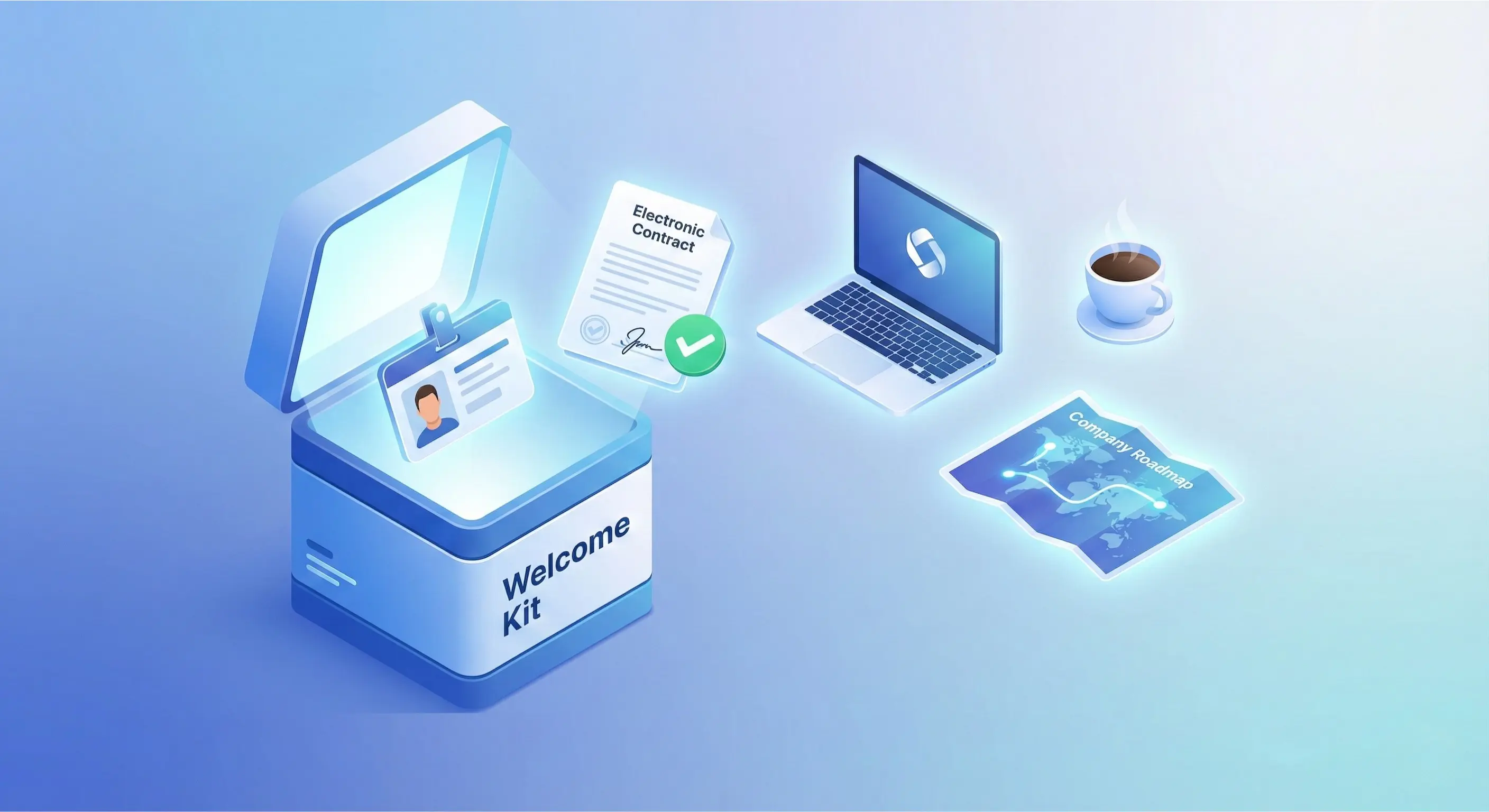
With Zoho People's Onboarding Flows, you can script the first three months of an employee's life before they even start.
Day -7 (The Pre-Boarding): The system automatically sends a welcome video from the CEO, a digital form to collect tax info (TD1), and a link to order their company swag.
Day 1 (The Welcome): They log in to a personalized dashboard. Their first task isn't "figure it out"; it's a curated checklist: Watch this video, Meet your buddy (scheduled automatically), Set up your profile.
Day 30 (The Check-In): The system pings the manager to schedule a retention review, ensuring the employee isn't drifting.
This isn't cold automation; it's warm consistency. It ensures that every single employee, whether they are in Vancouver or Halifax, gets the exact same "Red Carpet" experience.
Pro Tip: You can find pre-built onboarding templates in our Business Operations Shop to save you weeks of setup time.
Section 3: The Intranet is the New Watercooler
Where does your company "live"?
If you don't have a physical office, your company lives in the cloud. But for most businesses, that "cloud" is a messy folder of Google Docs and a chaotic WhatsApp group. That isn't a headquarters; that's a junk drawer.
Building a "Culture Hub"
A major trend for 2026 is the resurgence of the Company Intranet (using tools like Zoho Connect). But this isn't the boring corporate bulletin board of the 90s. This is a social network for your business.
Town Halls: A dedicated space for leadership updates where employees can comment and react (without clogging up email inboxes).
Knowledge Management: A searchable "Company Wiki." When a junior staff member asks, "How do I process a refund?" they don't need to disturb a senior manager. They type "Refund" into the search bar, and the SOP (Standard Operating Procedure) appears.
Recognition: A public "Kudos" wall where peers can tag each other for helping out.
When you centralize your culture, you democratize it. The quiet introvert in accounting gets just as much visibility for their hard work as the loud extrovert in sales.
Section 4: Killing the "Annual Review"
There is no ritual in corporate Canada more hated than the Annual Performance Review. It is awkward, it is usually biased, and it relies on a manager trying to remember what an employee did 11 months ago.
In a fast-paced digital business, waiting 12 months to give feedback is negligence.
The Shift to Continuous Feedback
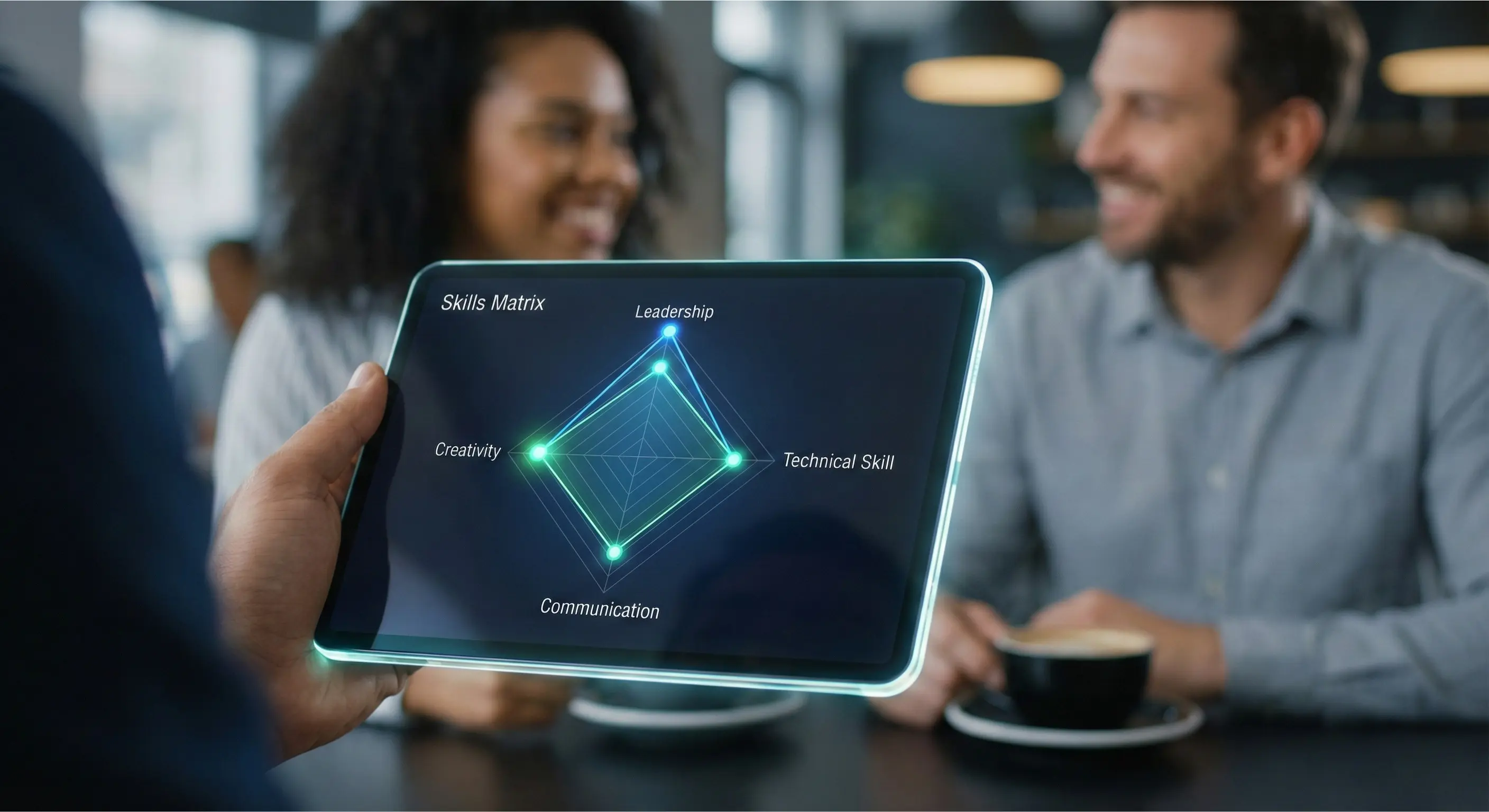
Modern People Operations platforms encourage "Micro-Feedback."
Imagine this workflow:
An employee finishes a major project on Tuesday.
On Wednesday, they request "Feedback" in the system from the 3 people they worked with.
The peers give a quick star rating and a 2-sentence comment.
The feedback is instantly saved to the employee's profile.
When the end of the year comes, the manager doesn't have to guess. They pull a report and see 50 data points collected over the year. The review becomes a summary of facts, not a collection of feelings.
This is critical for Diversity & Inclusion. By relying on data and continuous feedback loops, you reduce the "Recency Bias" (where you only judge the last 2 weeks of work) and ensure fair promotions based on actual output.
Section 5: The "Right to Disconnect" (Legally Required Sanity)
We cannot talk about Canadian HR in 2026 without mentioning the legal landscape. Ontario led the charge with "Right to Disconnect" laws, and similar policies are spreading across the country.
The blurred lines of hybrid work mean employees often feel they are "living at work" rather than "working from home."
Enforcing Boundaries with Tech
Ironically, you need technology to protect your people from technology.
After-Hours Protocols: You can configure your email and chat servers (Zoho Mail/Cliq) to hold non-urgent messages sent after 6:00 PM and deliver them at 9:00 AM the next day.
Holiday Mode: When an employee marks themselves as "On Leave" in the HR system, their access to work apps can be temporarily paused or muted.
This protects the business from burnout and legal liability. It signals to your team: "We value your rest as much as your hustle."

Conclusion: Technology Should Make Us More Human
It is easy to get lost in the features: the automation, the bots, the dashboards.
But the ultimate goal of adopting a sophisticated People Operating System isn't to turn your workforce into robots. It is the exact opposite.
By automating the robotic parts of management—the scheduling, the form-filling, the time-tracking—you free up your managers to do the human parts. You give them time to have actual career conversations. You give them time to mentor. You give them time to build culture.
The companies that win in 2026 won't be the ones with the strictest return-to-office mandates. They will be the ones that built a digital infrastructure so strong, so supportive, and so transparent that their employees can do their life's best work from anywhere.
Your office is no longer a building. Your office is your software.
Is yours a place people want to work?